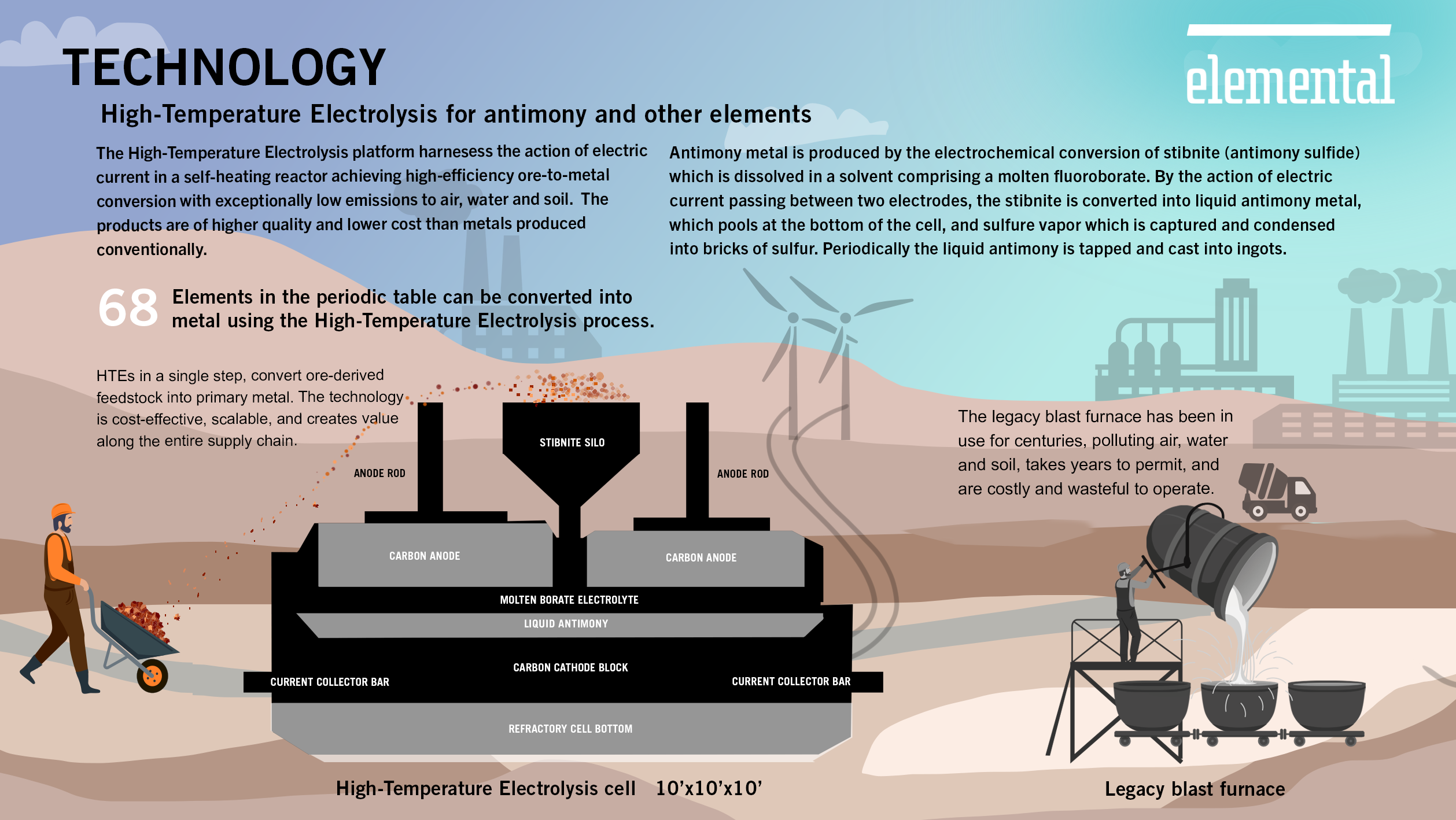
The High-Temperature Electrolysis platform harnesses the action of electric current in a self-heating reactor achieving high-efficiency ore-to-metal conversion with near zero emissions to air, water, or soil. The products are of higher quality and lower cost than metals produced conventionally.
Our platform technology is cost-effective, scalable, and creates value along the entire supply chain. High-Temperature Electrolysis addresses the unique chemistries of each mineral, whether grouped as oxides or sulfides. These technologies produce metal without the use of hydrocarbons and with no greenhouse gas emissions.


The impact of this technology is far-reaching, addressing half the periodic table of elements.
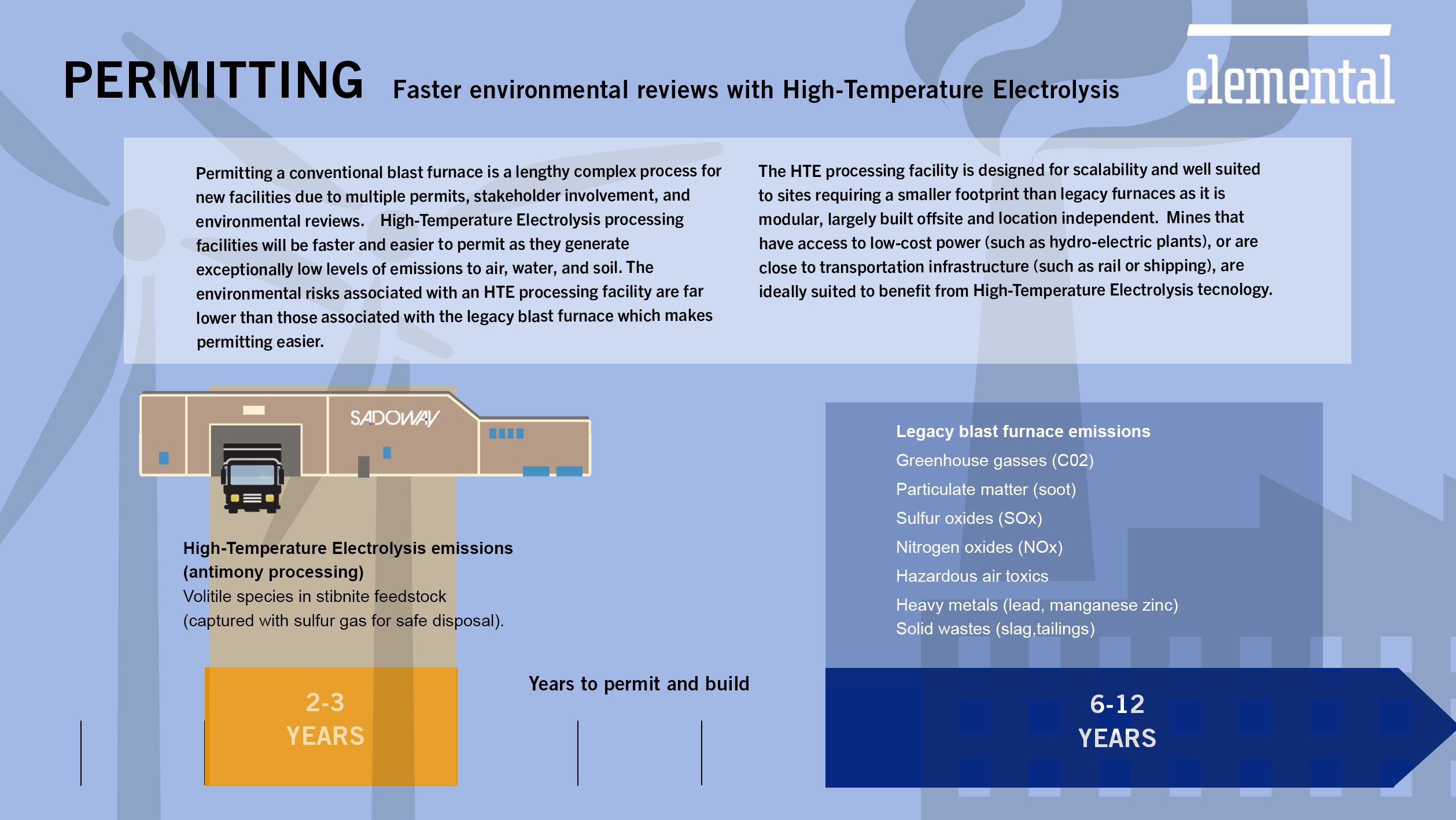
In stark contrast to legacy metals processing technologies, High-Temperature Electrolysis produces metal to specification at lower cost with near zero emissions to air, water and soil, regardless of the nature of the feedstock--oxide or sulfide. Greenfield installations will be easier to permit and site than the conventional process.

Today’s critical mineral processing sector-which turns raw ores into the purified metals we need for modern technologies, national security, and clean energy--presents immense risk to U.S. national security and economic growth. China dominates this sector, while the U.S. struggles to build capacity.”
Bipartisan Policy Center
Washington DC
Enables large-scale, long-duration batteries for grid stability, strengthening U.S. leadership in the clean energy transition.
Introduces green metallurgy and zero-waste processing tech, minimizing the environmental footprint compared to that of traditional practices.
Creates high-value American jobs across mining, processing, and advanced technology sectors, anchoring new commercial capacity in strategic U.S. industries.
Supports U.S. production of batteries, advanced propulsion, advanced technology, with defense and commercial supply chains, to deliver broad national resilience.
Models published by the Intergovernmental Panel on Climate Change (IPCC) and the International Energy Agency (IEA) require removing up to 20 Gt of carbon dioxide per year from the atmosphere. Sadoway has developed the solution to capture C02 and convert to carbon monoxide, which can serve as fuel or chemical feedstock.
The High-Temperature Electrolysis process qualifies for high-value carbon credits for engineering solutions. Sadoway is working to obtain third-party verification for the process that will create an additional monetary and social incentive for companies to reduce their carbon emissions.


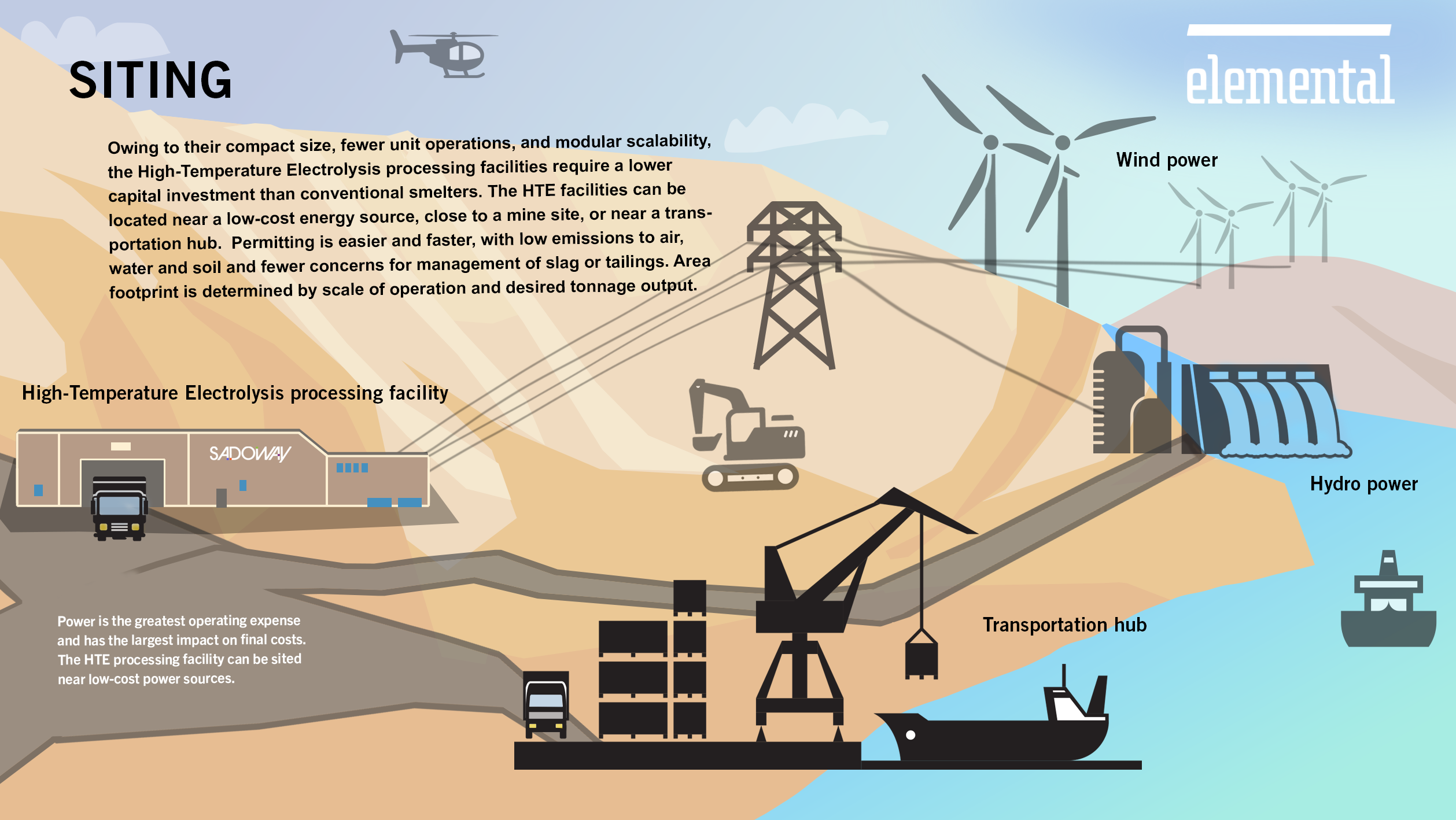
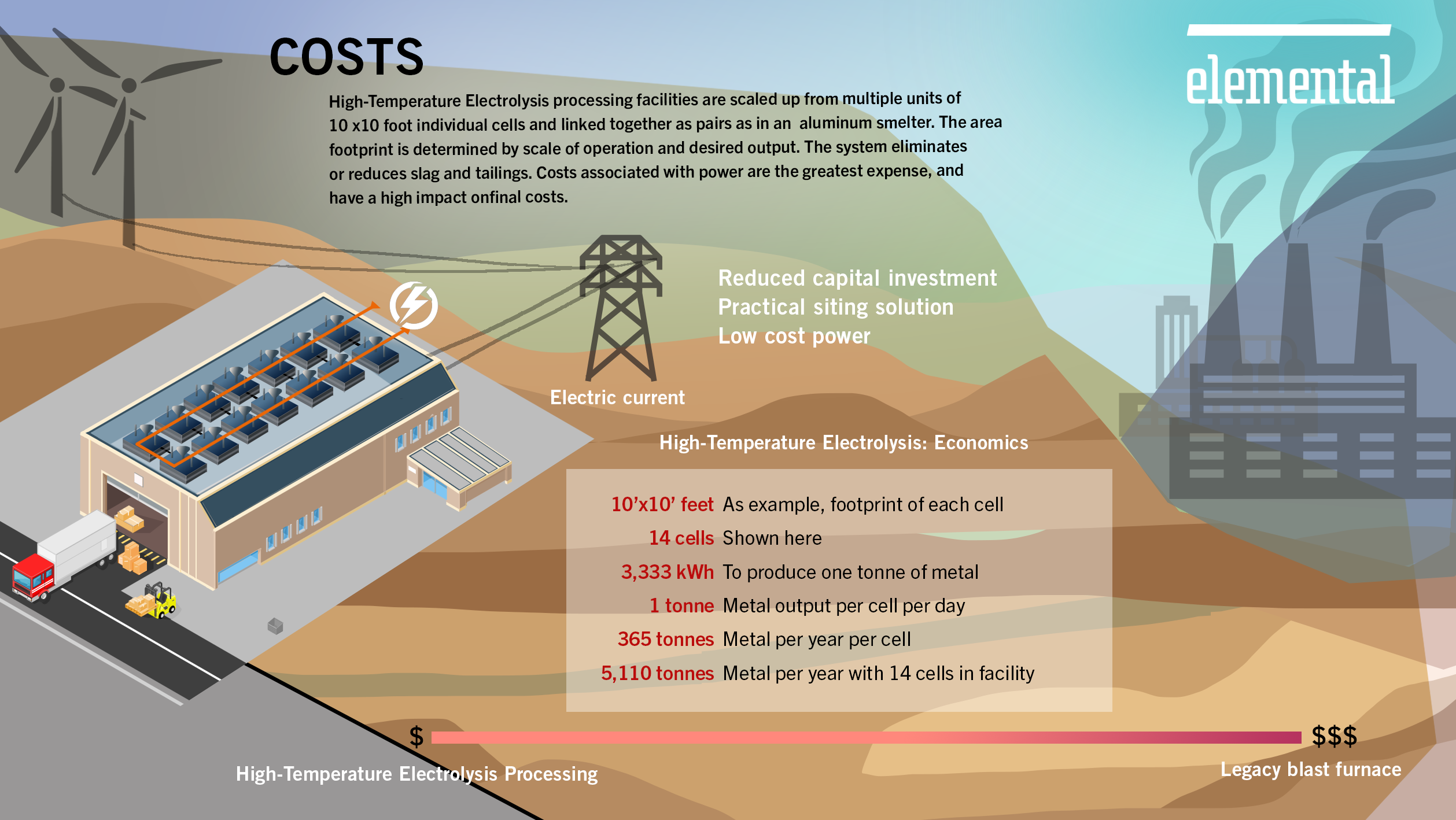
The High Temperature Electrolysis process allows miners to site metallurgical processing facilities close to power and transportation hubs, reducing the wasteful transport of ore to processing facilitites.
With near zero waste to air, water, and soil, permitting is faster and easier than with smelting with legacy technology. The High-Temperature Electrolysis cells are modular and scalable, easy to transport and build on site.
A deep-rooted supply chain interdependence binds the U.S to China and Russia, particularly as American industry and defense sectors depend on critical minerals.
In response, the U.S. government has embarked on a major push to secure the critical elements, building domestic supply chains and supporting advanced manufacturing. Yet the complexity of advanced processing capabilities pose significant challenges for even the largest, most advanced economies. The High-Temperature Electrolysis process addresses these needs with novel, cost-effective technology to extract a range of critical elements.
They call it “the missing midstream,” the challenges of establishing a robust domestic processing base in the United States. Addressing this challenge has generated bi-partisan support in congress. Initiatives like the Defense Industrial Base Act, Defense Production Act, and the Inflation Reduction Act, with $ billions allocated, are just the beginning of a strategic shift to bolster the U.S.’s capacity to extract, process, refine and manufacture metals. U.S. industry also recognizes that the sourcing of critical minerals is essential to national security signaling a prime opportunity for investment and industry growth.